
Instructional Designer
Most learning is boring. Mine isn't.
I'm Jackie Miller. I design learning people actually want to do — built around real people, real constraints, and the belief that learning is the way out.
Selected Work
Courses built to be worth someone's time.
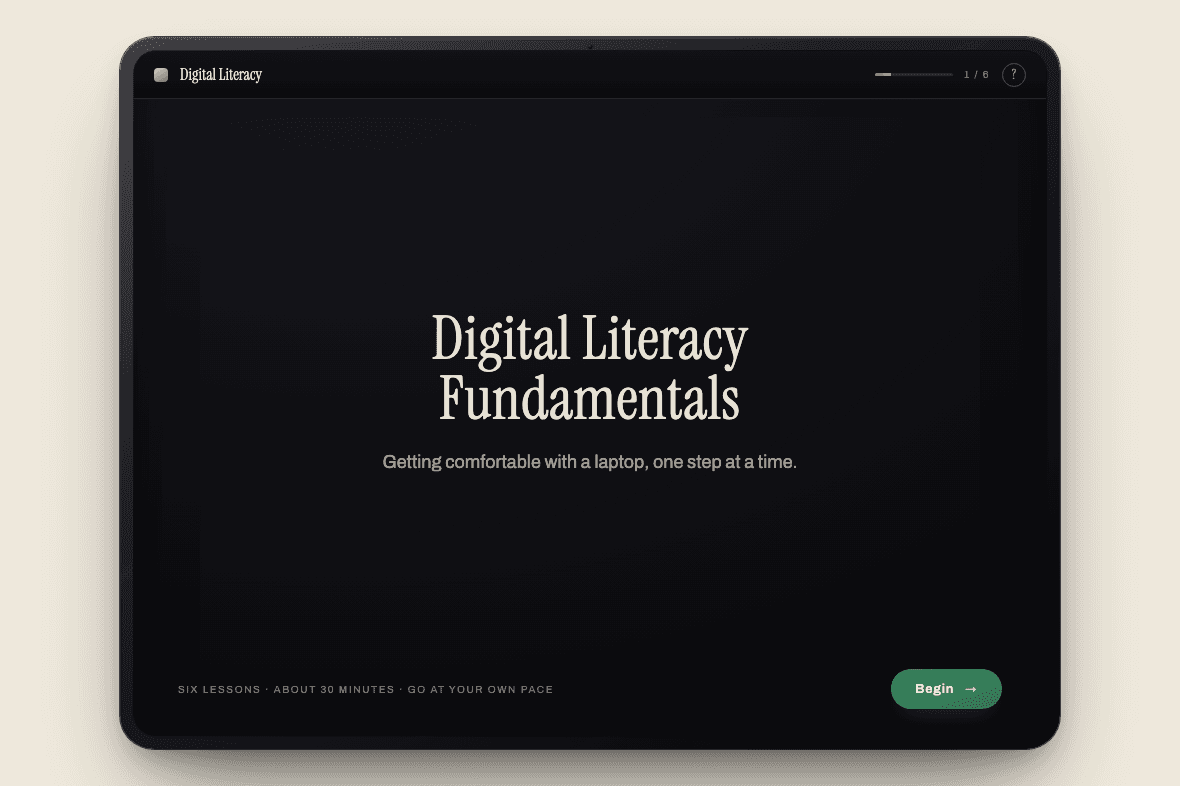
Digital Literacy Fundamentals
A full six-lesson course teaching first-time users the four input domains of a laptop — with a live, interactive capstone simulation — for learners preparing for reentry.
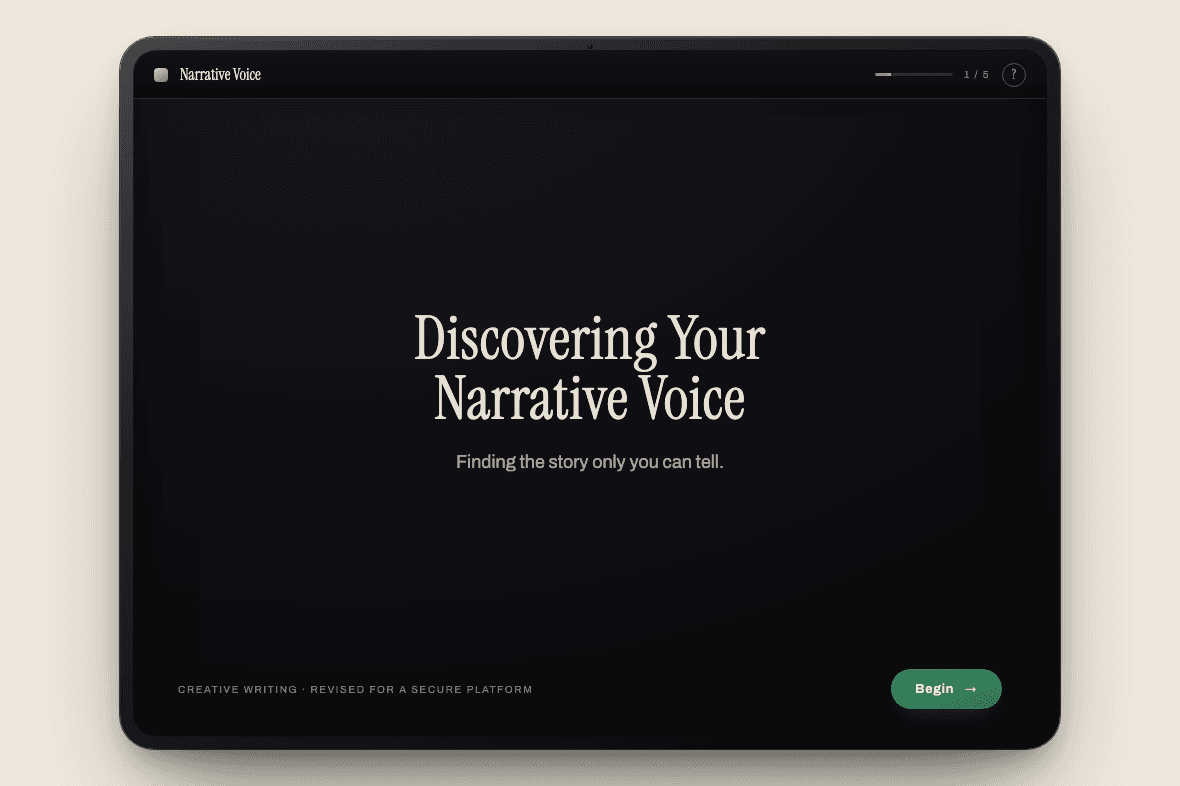
Discovering Your Narrative Voice
Auditing and revising an existing course for a secure, closed-platform learning environment serving justice-involved learners — treating interaction and aesthetic choices as instructional decisions.
About
Education is in my blood.
A superintendent grandfather, a librarian grandmother, two lifelong-teacher aunts — and a creative-writing degree that taught me to build a story people actually want to finish. I came up through art, photography, and words, and instructional design is the one field that lets me use all of it at once.

How I Work
A designer who thinks learning should look like something you'd choose to do.

Boring is the enemy
I treat visual craft as instructional craft. If a course looks like a chore, it teaches like one — so mine don't.

Designed for the real world
Locked-down devices, variable literacy, no IT support. I design around real constraints, not despite them.

AI is my force-multiplier
I direct the instructional design; AI accelerates the build — storyboard to working prototype, faster.

Humans are wired for story
We're built to remember narrative, not bullet points — so I design learning as story. That's what the creative-writing degree was really for.
Let's make learning worth someone's time.
Start a conversation