Designing for learners is one thing. Designing for learners inside is another.
I build learning for incarcerated and reentry-bound adults — designed around the realities of the environment, not despite them.
- No open internet
- Shared, locked-down devices
- Variable literacy
- No IT support
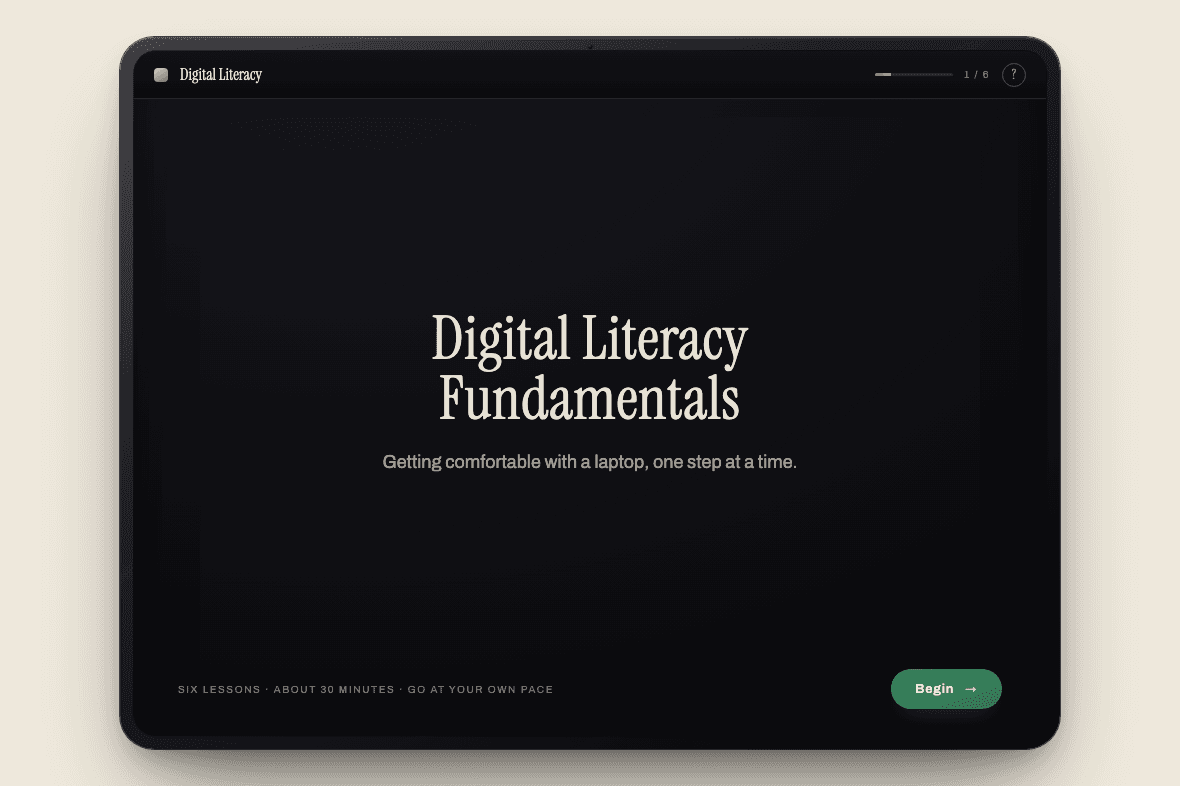
Digital Literacy Fundamentals
A full six-lesson course teaching first-time users the four input domains of a laptop — with a live, interactive capstone simulation — for learners preparing for reentry.
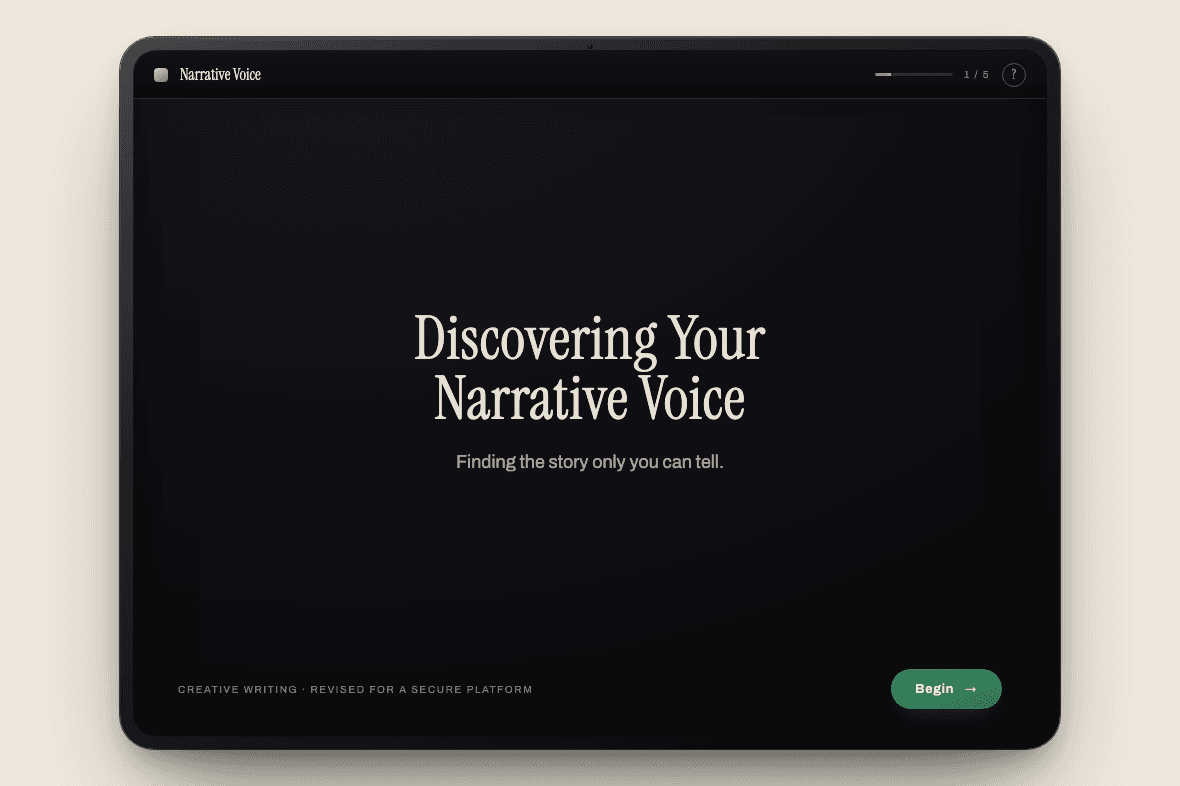
Discovering Your Narrative Voice
Auditing and revising an existing course for a secure, closed-platform learning environment serving justice-involved learners — treating interaction and aesthetic choices as instructional decisions.
Learning designed to be experienced, not endured.
Six commitments run under every project here, grounded in learning science and tested against the realities of the environment I design for most.
Read the full approachDifferent environment. Different problems. Different design.
Start a conversationMore case studies in progress.